
FAWT, the Floating Axis Wind Turbine, pairs a vertical-axis rotor with a rotating cylindrical float. A 20 kW unit began sea trials at Iki, Japan, in July 2026, and its developers target a 2 MW sea trial by 2029. The cost advantage is still their own estimate, with a hundredfold scale-up and certification ahead.
Heavy equipment sits near the water and the structure may lean. The aim is to tackle large floats and moorings by a route other than building the same machine bigger.
The developers expect to halve CAPEX and OPEX and report that the concept looks viable. The public documents we reviewed give no LCOE figure, so outsiders have little to test.
In the developers’ survey, responses citing a shortage of yards rise from five at 2 MW to eight at 5 MW. A design that is easy to split into parts still has to be assembled and moved.
👉 Background: floating offshore wind in Japan
Why conventional floating wind gets so large
Japan has limited shallow water, so it needs floating wind for deeper sites. The developers’ starting point is that a horizontal-axis turbine drives up the size and cost of the float and mooring.
The public IEA 15 MW reference turbine shows why. Its hub sits 150 m up and carries about 1,017 tonnes of rotor and nacelle. Commercial machines differ, but the problem has the same shape: mass held high has to be kept upright in wind and waves.
👉 Floating Offshore Wind Platform Design: Engineering Fundamentals and Key Types
FAWT’s five design choices and how far each is proven
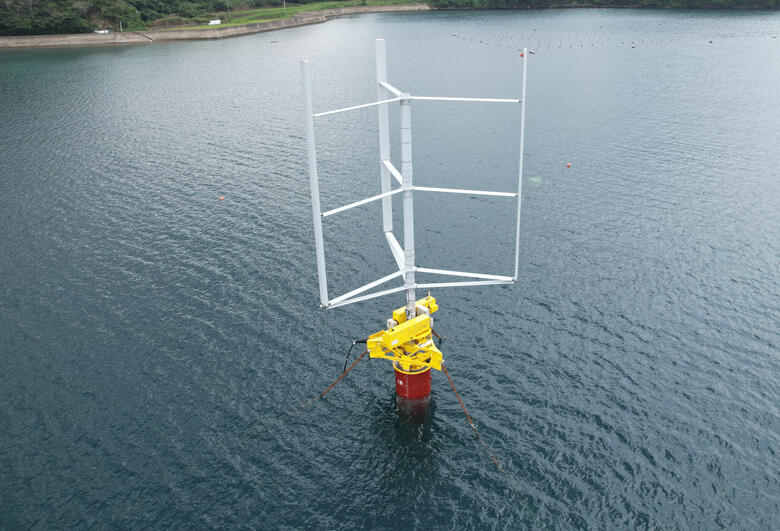
Figure 1: The FAWT experimental machine (20 kW, 9.3 m rotor) at Iki
Three straight blades turn around a vertical axis, supported by a cylindrical float. Rotor and float turn together.
Source: FAWT consortium, 2026
FAWT starts from what suits a floating structure. With the generators low, the machine rights itself like a roly-poly toy. The developers’ documents allow 20 degrees of tilt at rated wind speed. At average wind speed the tilt is 2 to 3 degrees, so the machine normally stands nearly upright.
| Design choice | Effect the developers expect |
|---|---|
| Light rotor, low centre of gravity | Half the weight of a horizontal-axis turbine and tower, allowing a smaller float |
| Rotating cylindrical float | The float carries turbine weight and overturning moment, so no large main bearing is needed |
| Tilt tolerance | Moderate tilt maximises output and shrinks the float further |
| Modular parts | Fifteen 1 MW generators can make a 15 MW machine, easing domestic supply. Blades use continuously formed carbon fibre composite |
| Installation without a large crane | Assembled on land and self-erected at sea, shortening schedules and reducing port area |
Efficiency holds the cost case together. Small vertical-axis rotors have a poor reputation because flow separates from the blades and they stall. The developers say large machines resist stall and reach the same efficiency as horizontal-axis turbines. A 20 kW unit is too small to prove that.
“Half the cost” is the developers’ estimate
In 2025 the developers said they expected to halve CAPEX and OPEX against horizontal-axis floating wind. Their July 2026 report says they estimated LCOE for a 2 MW machine and found the concept viable in comparison.
The public documents we reviewed do not show the numbers, and we found no independent check. The aim is clear. The basis of the comparison cannot yet be tested from outside.
The road to a 2 MW trial in 2029
The public record shows the schedule quite well, and it also shows where plans and results differ.
- Small unit: the 2024 announcement planned the trial for fiscal 2025. Sea trials began on 2 July 2026 and should run for a year, after which the unit is removed and inspected.
- Certification: the 2025 report planned basic design approval that year. The 2026 report records a technical statement from a certification body and names the certification process as a remaining task. The documents do not explain how the two relate.
- Next machine: the 2024 work compared 2, 5 and 15 MW. The 2026 report focuses on a 2 MW sea trial.
- Timing: the NEDO project ended in March 2026. The developers’ target is 2029, Nikkei reported around 2030, and the September 2026 alliance announcement gave no year.
The July announcement names six companies: J-Power, TEPCO Holdings, Chubu Electric, K-Line, Sumitomo Heavy Industries and Albatross Technology. Funding and the alliance behind the next stage are covered separately.
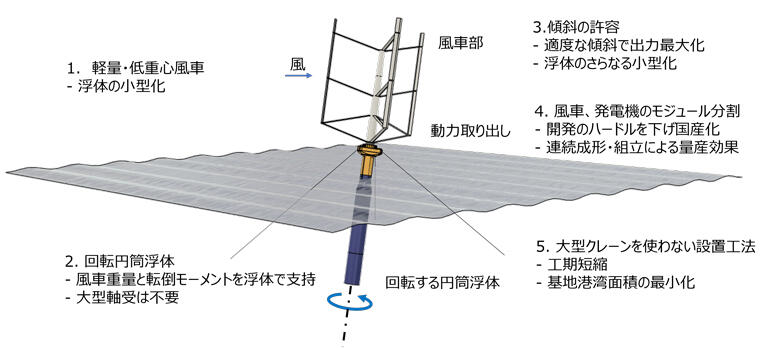
Figure 2: Concept image of a megawatt-class FAWT
A developer illustration. The next step after the 20 kW unit is a 2 MW trial.
Source: FAWT consortium, 2026
From 2 MW to 5 MW, yard shortage responses rise from 5 to 8
The developers also published a supply chain survey, asking manufacturers where bottlenecks might appear. Respondents could choose more than one.
| Bottleneck | 2 MW | 5 MW | 15 MW |
|---|---|---|---|
| Transport | 7 | 9 | 9 |
| Yard shortage | 5 | 8 | 8 |
| No suitable production equipment | 4 | 8 | 8 |
| Logistics infrastructure | 4 | 8 | 7 |
| Staff shortage | 5 | 6 | 7 |
| Price and currency swings | 6 | 6 | 6 |
| Standards and certification | 4 | 3 | 4 |
The jump comes at 5 MW. Yards, equipment and logistics all rise together, and transport remains the most cited issue. Modular parts may ease manufacturing, yet problems tied to the size of the finished machine remain.
There is also an estimate of output. Based on interviews with partner companies, 2 MW floats could reach about 55 units a year. That assumes five firms building whole floats and five groups building together. In capacity terms it is 110 MW a year, or about seven 15 MW machines. This is a sense of scale, since it says nothing directly about building 15 MW floats.
A lender looks past a low estimate to the evidence behind it. Certification, operating data and measured output are what make repayment possible to assess, and FAWT has all three still in progress. The developers also argue that a floating turbine, as a vessel, could be sold or leased, creating a second-hand market. That remains an idea, and we would be cautious about building a financing plan on a market that does not yet exist.
The question for FAWT is whether its cost case survives real data from a 2 MW machine, because a 20 kW unit working at sea cannot settle that.
FAWT aims at floats, installation and ports, the heavy items in Japan’s floating wind costs. Its mix of utilities, a shipping line and a heavy manufacturer reflects that aim. Even so, the cost advantage rests on the developers’ estimate, with no figure yet open to outside checks.
It is worth following if you want early sight of whether your components, vessels or port could serve a new type of machine. Exercise caution if you would build the expected halving of costs into a demand or budget case. A fair comparison with conventional designs has to wait for 2 MW results.
Three milestones matter next: the Iki results, due around mid-2027; progress on certification; and the site and funding for the 2 MW machine. Together they will show whether the 2029 target holds.
Related DeepWind Articles
- Floating Offshore Wind in Japan: The 20 kW to 2 MW Gap
- Floating Offshore Wind Platform Design: Engineering Fundamentals and Key Types
- Floating Offshore Wind in Japan: Market Structure, Costs, and Policy
Free reportWhich of April’s planning assumptions no longer hold? Our 17-page review of Japan’s offshore wind market, April to September 2026. Free when you subscribe to the Weekly. See what’s inside →