
Noshiro, Mitane, and Oga Offshore Wind Project was implemented as part of the Japanese government’s first offshore wind power generation tender (commonly known as Round 1). However, the project was suspended in August 2025 following the developer’s decision to withdraw. A re-tendering process for this sea area is scheduled to take place from 2026 onwards.
This article provides a detailed overview of the project, including installation locations, site conditions, and schedules.
➡ For an overview of all ten Promotion Areas as of 2025, see:
Promotion Areas for Offshore Wind in Japan – 2025 Overview
1. Project Overview
The developer decided to withdraw from the project in 2025. Re-tendering is scheduled to take place from 2026 onwards.
| Project name | |
| Developer | |
| StakeHolders | C-TECH CORPORATION Mitsubishi Corporation |
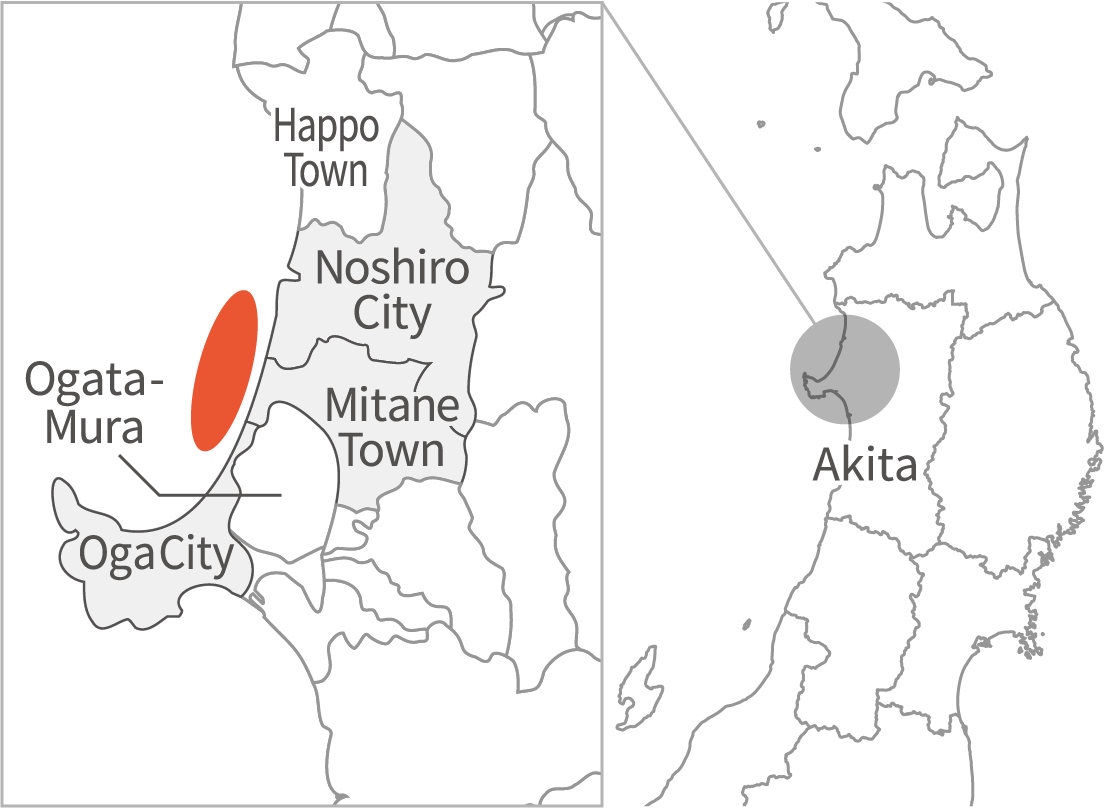
| Location | Offshore Noshiro Mitane Oga City, AKITA Prefecture |
| Type | Fixed-bottom Offshore Wind Power |
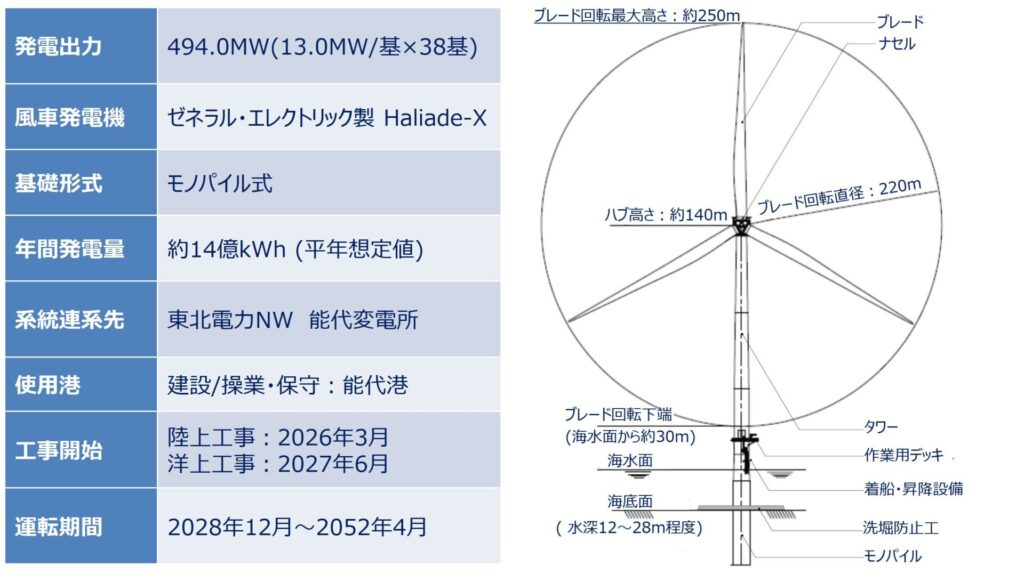
| WTG | |
| Price | |
| Capacity | 494 MW |
| Start of Construction | |
| Operation Period |
2. Location and Site conditions
2-1. Wind Conditions
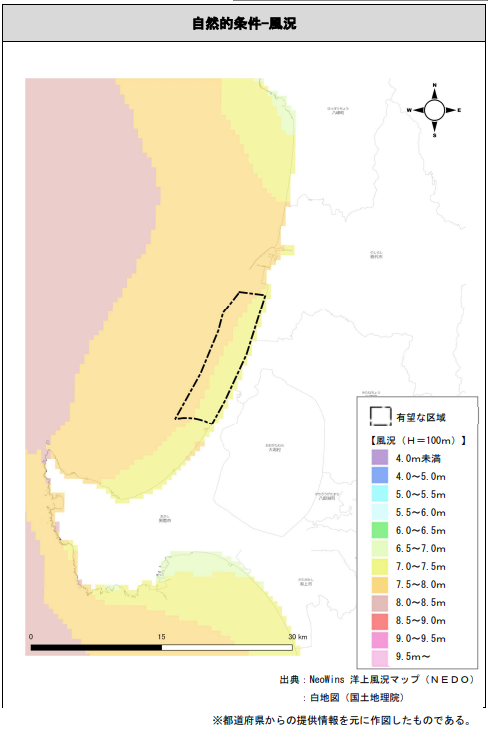
The wind speed within the zone is approximately 7.0–8.0 m/s (at 100 m altitude).
2-2. Water Depth

The water depth within the zone is less than 30 m.
2-3. Port Infrastructure
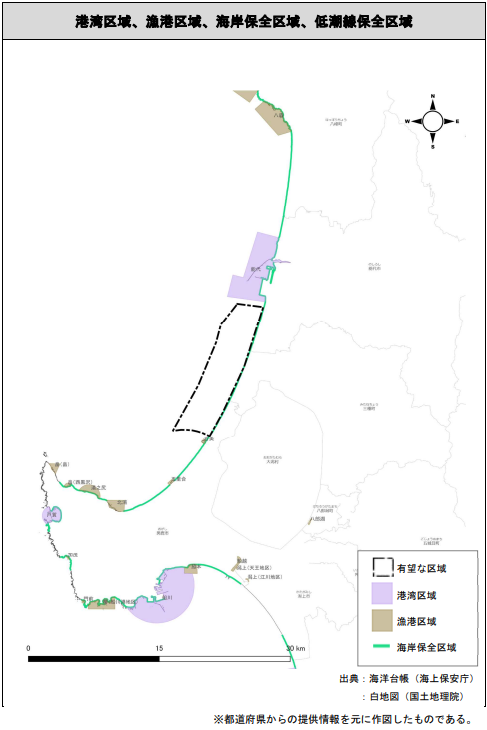
Construction and O&M: Noshiro Port is planned to be utilized.
3. Overview of Wind Turbine Facilities
4. Project Timeline
- October 8, 2019: 1st Statutory Council Meeting
- December 26, 2019: 2nd Statutory Council Meeting
- March 30, 2020: 3rd Statutory Council Meeting
- September 27, 2022: 4th Statutory Council Meeting
- March 18, 2024: 5th Statutory Council Meeting
- September 4, 2025: 6th Statutory Council Meeting
- November 27, 2025: 7th Statutory Council Meeting
1️⃣ Development Phase (2021-2026)
- Public auction awarded in December 2021
- Environmental impact assessment, wind measurements, and seabed studies
- FIT approval & permitting process
- Collaboration with local fishing industries & communities
2️⃣ Construction Phase (2026-2028)
- March 2026: Onshore substation & transmission infrastructure
- June 2027: Offshore foundation & cable installation
- 2028: Wind turbine assembly & installation
3️⃣ Operation & Maintenance (2028-2052)
- Managed by Mitsubishi Corporation & GE
- Ongoing maintenance at Noshiro Port
4️⃣ Decommissioning & Repowering (2052 onwards)
- End-of-life planning for wind farm components
- Potential repowering based on future energy policy
EIA status
| 事業名称 Project name | 事業者名 Developer | 手続段階 EIA Stage | 容量 Capacity | 基数 Turbines | 出力 Rating | 更新日 Last Updated |
|---|---|---|---|---|---|---|
| (仮称)秋田県能代市・三種町・男鹿市沖における洋上風力発電事業 Akita Noshiro Mitane Oga Offshore Wind | 秋田能代・三種・男鹿オフショアウィンド合同会社 Akita Noshiro Mitane Oga Offshore Wind LLC | 方法書 Method Statement | Up to 532MW | Up to 38 | 12.6 – 14MW | 2025/06/10 |
Source: Environmental Impact Assessment Case Information (Ministry of the Environment, Japan)
5. Reviewing the Business Plan from Scratch?
Mitsubishi Corporation announced that it had recorded an impairment loss of 52.2 billion yen for the April–December 2024 period due to a reassessment of its three domestic offshore wind projects. At a press conference, President Katsuya Nakanishi stated, “We take the impairment seriously” and indicated that the company will reconsider its future business policy from scratch.
5-1. Causes of the Impairment and Future Policy
Mitsubishi Corporation won bids for three projects in 2021 and has been developing them for about three years. However, due to global inflation, yen depreciation, and rising interest rates, project costs significantly exceeded expectations. As a result, the company is reassessing profitability, with a final decision on whether to continue the projects to be made in the future.
The company also explained that nearly all recorded assets have been written off, and although further impairment losses may occur, the impact would be limited.
5-2. Breakdown of the Impairment Loss
Expenses related to surveys, design, and permitting had been recorded as assets but are now entirely written off. The total of already-paid expenses and expected future costs amounts to 52.2 billion yen.
5-3. About the Bid Pricing
In the 2021 auction, Mitsubishi Corporation won the projects with significantly lower bids than its competitors. The company explained that the decision was based on risk analysis using the expertise of Eneco. However, higher-than-expected inflation and cost increases greatly impacted the projects’ profitability.
5-4. Future of the Offshore Wind Business
Mitsubishi Corporation recognizes offshore wind as a key power source for a decarbonized society. Going forward, it intends to carefully assess its business strategy in light of inflation, interest rates, and currency trends.
6. Mitsubishi-led Consortium to Exit Three Offshore Wind Projects in Japan-Aug 26th
Mitsubishi Corporation and partners are preparing to withdraw from offshore wind projects across three sites off Chiba and Akita prefectures.
6-1. Why Exit?
- Ultra-low bid prices during the auction
- Rising material and construction costs
- Projects deemed no longer economically viable
This marks a major setback for Japan’s flagship renewable energy program.
Re-tendering is expected, but the withdrawal highlights the challenges of balancing cost-competitive auctions with the realities of supply chain inflation and project financing.
6-2. Implications
- Investor confidence hinges on how the government resets its renewable energy policy
- Japan’s offshore wind strategy may face a significant review
- Timeline pressure toward the 2030 (10 GW) and 2040 (30–45 GW) national targets increases
7. LCOE and IRR Estimation
Evaluating the bankability of offshore wind projects requires close attention to key cost indicators such as LCOE (Levelized Cost of Energy) and IRR (Internal Rate of Return). However, in Japan’s Promotion Zones, detailed project-level cost information remains limited in publicly available materials. As a result, investors and developers often lack sufficient data to form a fully informed assessment.
To address this gap, DeepWind applies a proprietary cost model using representative site conditions for each project, including wind resource (capacity factor), water depth, distance to port, and distance to grid connection point. Based on these input parameters, we estimate CAPEX, OPEX, LCOE, and IRR in a consistent framework.
This approach allows us to provide a cross-project comparison of the relative economic positioning of Japan’s Promotion Zone projects.
▶ For the latest model assumptions and updated relative positioning, please refer to the cost analysis Pillar article below.
👉 Cost Realities of Japan’s Offshore Wind: Analyzing LCOE and IRR Across 12 Promotion Zones (Latest Edition)
Conclusion
Although this project has been temporarily suspended following the developer’s withdrawal, re-tendering is scheduled from 2026 onwards, and further developments are anticipated.
To explore how this area compares nationally and understand Japan’s offshore wind roadmap, visit:
Promotion Areas for Offshore Wind in Japan – 2025 Overview —
your guide to Japan’s offshore wind Promotion Areas.
Round 4 Is Not a Reset.📘 DeepWind Premium Report
A concise, decision-oriented structural brief on what actually changed —
and what remains structurally broken.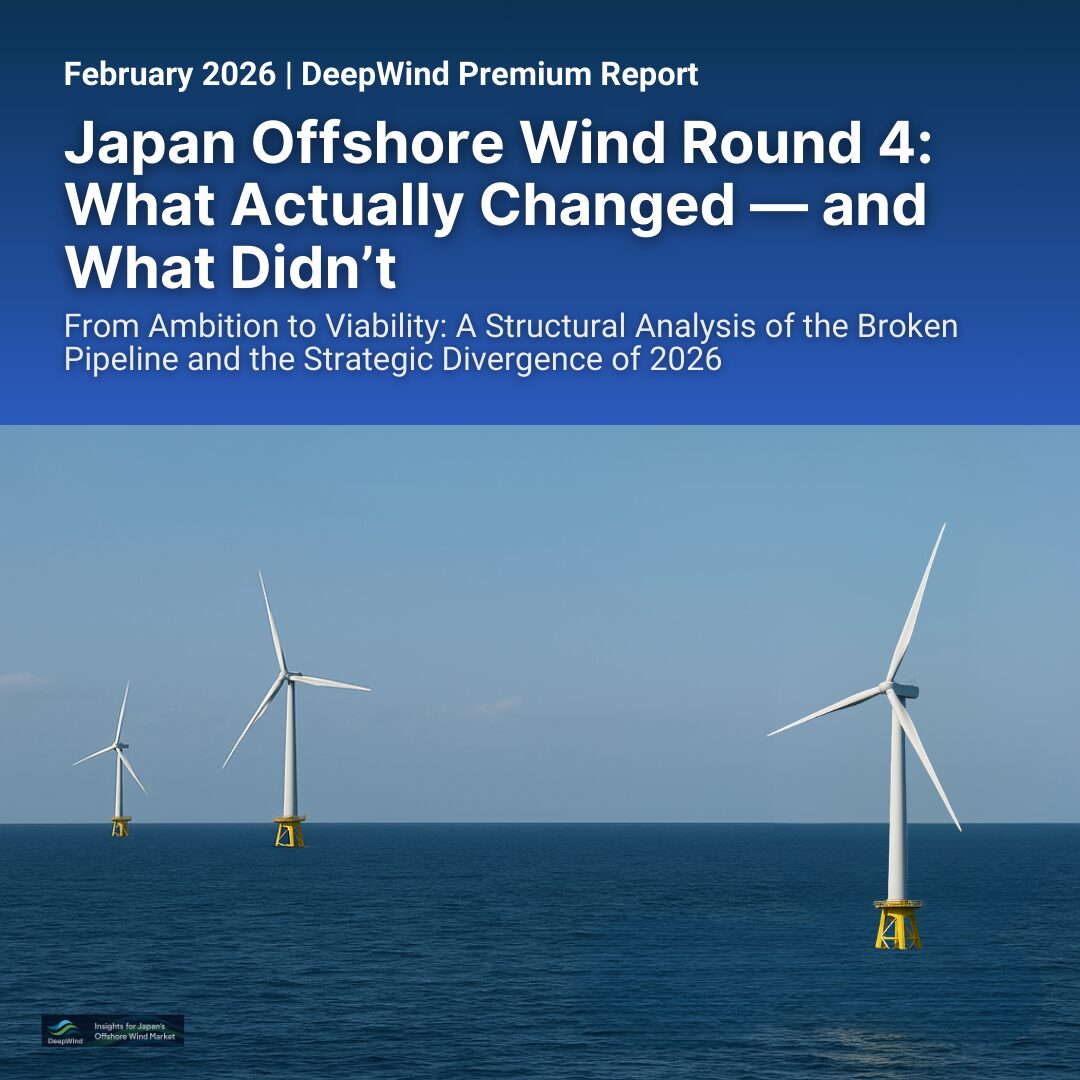
- 🔍Market Insights – Understand the latest trends and key topics in Japan’s offshore wind market
- 🏛️Policy & Regulations – Explore Japan’s legal frameworks, auction systems, and designated promotion zones.
- 🌊Projects – Get an overview of offshore wind projects across Japan’s coastal regions.
- 🛠️Technology & Innovation – Discover the latest technologies and innovations shaping Japan’s offshore wind sector.
- 💡Cost Analysis – Dive into Japan-specific LCOE insights and offshore wind cost structures.